Blog
Custom Patches for Nonprofits and Fundraising: What Actually Works

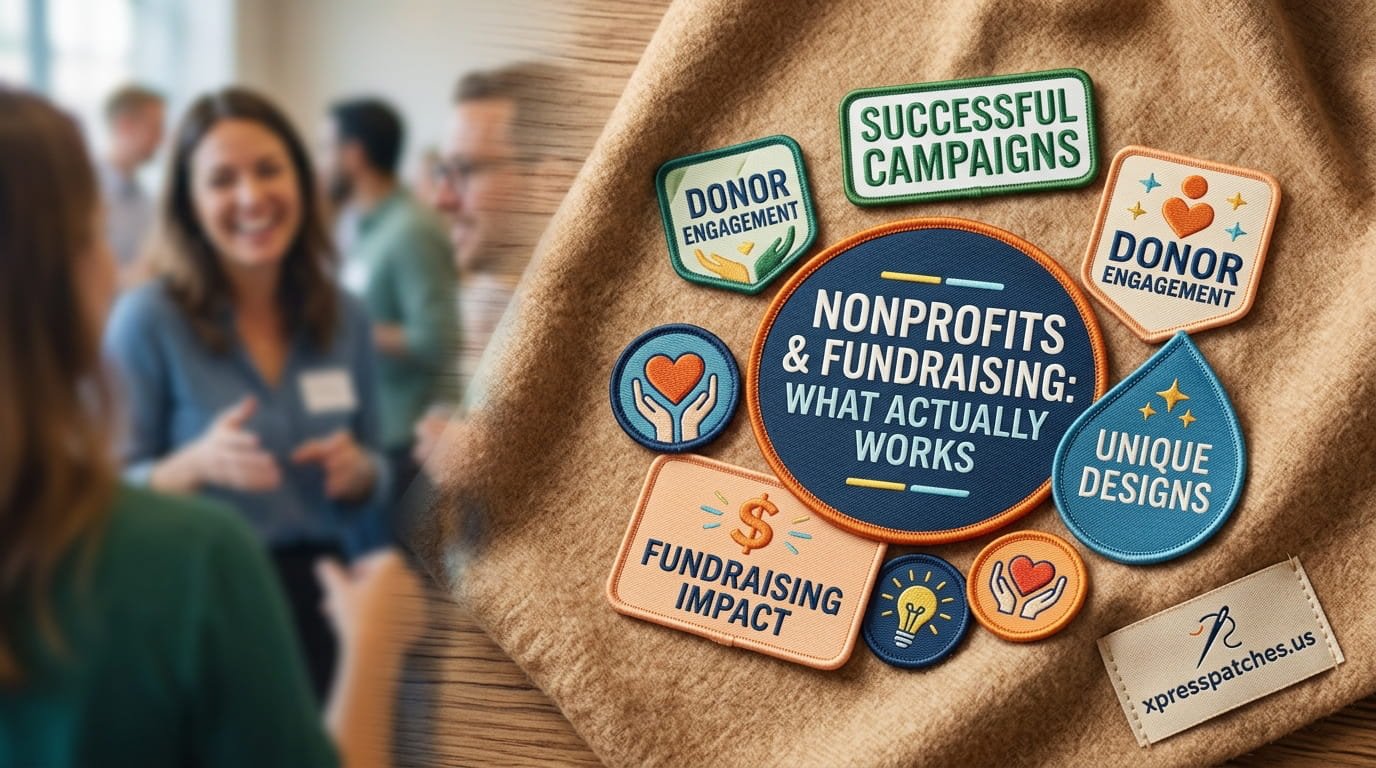
Custom patches for nonprofits and fundraising tend to get overlooked in favor of the usual options — t-shirts, tote bags, baked goods. That’s a mistake, and it’s usually made because nobody has done the math on patches as a fundraising tool. The margin is better than most alternatives. The barrier to entry is lower. And for youth organizations, community groups, and cause-based nonprofits specifically, a well-made patch carries the kind of emotional weight that a branded tumbler never will.
This guide covers the practical side: how nonprofits actually use patches to raise money, which types work best, how to price them, and what to know before you place an order.
Three Ways Nonprofits Use Custom Patches
Not every nonprofit uses patches the same way, and the right approach depends on the type of organization and the audience you’re trying to reach.
Direct Sale at Events and Online
The simplest model: order patches, sell them. A 3-inch embroidered patch that costs $2 to $3 to produce can sell for $10 to $15 at a fundraising event without any resistance, particularly when buyers understand the proceeds go to a cause. That’s a 400 to 600 percent margin before you account for any donated labor on the selling side.
This works especially well for organizations that already run events — walkathons, galas, school fairs, community markets. The patch becomes an impulse purchase at the registration table or merchandise booth. Lightweight to transport, easy to display, and it doesn’t require sizing decisions the way apparel does.
Donation Tier Rewards
Crowdfunding campaigns, annual giving programs, and membership drives all benefit from tangible rewards at specific donation levels. A patch is one of the most cost-effective physical rewards available because it’s lightweight enough to mail in a standard envelope for under $1 in postage, and it has a perceived value well above its production cost.
A common structure: donors at $25 or above receive a custom patch. At $50 or above, they receive two. The patch becomes a visible signal of support that donors wear or display, which creates organic visibility for the cause. Someone spotting an unfamiliar patch and asking about it is the kind of word-of-mouth that a social media ad can’t replicate.
Volunteer and Staff Recognition
Beyond fundraising, custom patches work as recognition tools for the people who make a nonprofit run. A patch given to a volunteer who completes a training program, a long-term donor who has given for five consecutive years, or a staff member who reaches a milestone costs a fraction of a plaque or certificate but often carries more meaning because it’s wearable. The volunteer puts it on their bag or jacket and takes it everywhere.
For youth organizations in particular — scouts, youth sports, school clubs — this is where custom patches have the longest track record. The merit badge format, where specific patches mark specific achievements, turns each patch into a goal rather than a gift.
Which Patch Type Works Best for Nonprofits?
The answer varies by audience, but a few patterns hold across most nonprofit contexts.
Embroidered Patches for Most Fundraising Applications
Embroidered patches are the right default for most nonprofit fundraising. They look substantial, hold up after years of use, and feel like a real keepsake rather than a promotional giveaway. Buyers at a fundraising table can feel the quality before they hand over the money, which reduces the friction of the sale. For cause-based organizations, that tangibility matters.
Chenille Patches for Youth Organizations and Schools
Chenille patches use a looped yarn that creates a soft, textured surface associated with varsity jackets and achievement awards. For school booster clubs, youth sports teams, scouting programs, and student organizations, chenille carries an earned-it feeling that embroidered patches don’t quite match. A student who receives a chenille patch for completing a program treats it differently than a flat promotional item.
Woven Patches for Organizations with Detailed Logos
Woven patches are worth considering if your organization’s logo includes fine detail, small text, or intricate elements that embroidery at small sizes might blur. Woven construction holds sharper detail per inch than embroidery, which can matter for established nonprofits with complex crests or emblems that need to reproduce accurately at 2 to 3 inches.
How to Price Custom Patches for Fundraising
Pricing patches for fundraising is different from pricing them for retail merch, because the buyer’s motivation is different. At a fundraising event, the buyer already wants to support the cause — the patch is partly a way of doing that and partly a reward for doing it. That context gives you more pricing flexibility than a standard retail transaction.
A few reference points that work in practice:
- Event table pricing: $10 to $15 for a single 3-inch embroidered patch. This is the range where impulse purchases happen without much deliberation. Price higher than $18 and you start requiring a more considered decision from the buyer.
- Online shop pricing: $12 to $18, with free shipping on orders above a certain amount to incentivize multiple purchases. Patches ship cheaply in flat envelopes, so free shipping is easy to absorb into the margin at this price point.
- Donation tier rewards: the patch is “free” with the donation, but factor its production cost into the tier minimum. A patch that costs $3 to make should anchor a $25 or $30 giving level, not a $10 one.
- Bundle pricing: two patches for $20 or three for $25 increases average transaction value and reduces the unit cost if you’re ordering multiple designs anyway.
How Many to Order — and Why No Minimum Matters Here
One of the biggest blockers for nonprofits considering patches as a fundraising tool is the assumption that you need to order hundreds to make the economics work. That assumption comes from the traditional patch industry, where minimum order quantities of 50 to 100 were standard, and the per-unit cost dropped significantly only at 500 or more.
With no minimum order at Xpress Patches, that calculation changes. You can order 10 patches to test a design at a small event, see how they sell, and reorder 50 or 100 if the response is good. You’re not committing $500 to inventory before you know whether anyone wants to buy them. For a small nonprofit operating on a tight budget, that’s meaningful — it converts a significant upfront risk into a low-stakes test.
According to Nonprofit Tech for Good’s guide to merchandise fundraising, the most common mistake small nonprofits make with physical merchandise is over-ordering on a first run and ending up with inventory they can’t sell. Starting small and scaling based on actual demand avoids this entirely.
Designing a Patch That Sells
A patch that sells at a fundraising table usually has one of three things going for it: it features a strong, recognizable logo; it includes a specific date or event name that makes it a keepsake for people who were there; or it makes a visual statement about the cause that the buyer wants to make visible on their jacket or bag.
A few design decisions that affect how well a patch sells:
- Include the year or event name if it applies: a patch from a specific walk, gala, or campaign year becomes a collectible for repeat attendees, which drives reorders year after year
- Keep the design legible at arm’s length: a patch someone is considering buying at a table needs to be readable from two to three feet away. If they can’t tell what it is without picking it up, sales will be lower than they should be
- Bold over detailed: for fundraising contexts, bold, high-contrast designs tend to outperform intricate ones. The patch needs to communicate at a glance, not reward close inspection
Frequently Asked Questions
How can nonprofits use custom patches for fundraising?
Nonprofits use custom patches in three main ways: selling them directly as merchandise at events or in online shops, including them as rewards in donation tiers, and giving them to volunteers and staff as recognition items. Patches work well in all three because they have high perceived value relative to their production cost, which keeps fundraising margins healthy.
What is the best type of patch for nonprofit fundraising?
Embroidered patches are the most popular for fundraising because they look substantial, hold up well, and feel like a real keepsake. Chenille patches work particularly well for youth organizations and schools where the textured, varsity-style look resonates with the audience.
How much should a nonprofit charge for custom patches?
A nonprofit can comfortably price custom patches between $10 and $20 each at events or online. A well-made embroidered patch that costs $2 to $3 to produce can sell for $12 to $15 without resistance, particularly when buyers understand the proceeds support a cause they care about.
Can a nonprofit order custom patches without a minimum quantity?
Yes. At Xpress Patches there is no minimum order, which is particularly useful for nonprofits testing a new design or running a small event. You can order exactly the quantity you need rather than over-ordering to hit a minimum and holding excess inventory.
Start with a Free Quote
At Xpress Patches, nonprofits and community organizations order the same way everyone else does — no minimum, free digital mock-up in 24 hours, 14-day delivery, and a 100% money-back guarantee if the patches aren’t right. Start with a small test run and scale from there once you see how your audience responds.