Blog
Patches vs Direct Embroidery: Which Is Actually Cheaper for Uniforms?

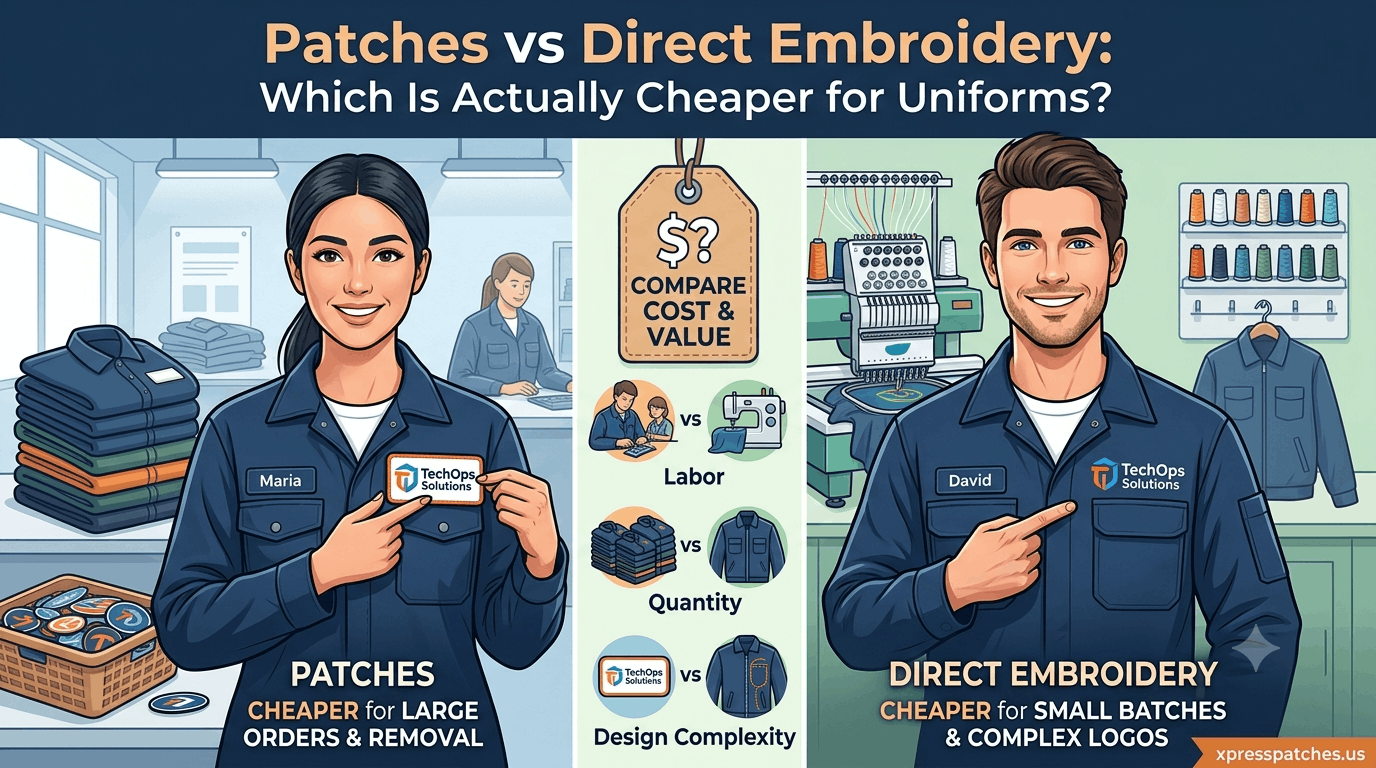
Patches vs direct embroidery is one of those decisions that looks simple on the surface. In practice, the cost difference between the two methods compounds fast once you factor in staff turnover, logo updates, and uniform replacement cycles. Most businesses don’t realize how much they’re overpaying for direct embroidery until they run the actual numbers. This post breaks down what each method costs, where the savings come from, and when direct embroidery still makes more sense than patches.
How the Two Methods Work
Direct embroidery stitches your logo or design directly into the garment fabric using a machine. The design becomes part of the material itself. That’s permanent, which sounds like an advantage — until a uniform wears out or an employee leaves, and you realize you’re paying to embroider every replacement from scratch.
Patches vs direct embroidery works differently. A patch is a separate piece of embroidered, woven, PVC, or printed fabric made once and then applied to whatever garment you need. When a uniform gets replaced, the patch simply comes off and goes onto the new one. The patch travels; the embroidery doesn’t. That difference in reusability is where most of the cost argument lives.
The Real Cost Comparison in Patches vs Direct Embroidery
Here’s where the patches vs direct embroidery argument gets decided. Direct embroidery on a single garment typically costs $3 to $5 per logo placement, depending on design complexity and stitch count. That fee resets every time you order a new garment.
A comparable embroidered patch runs $1 to $2 at small quantities, dropping below $1 per patch at 100 pieces or more. Add roughly $0.50 to have someone sew the patch onto a garment and you’re still well below direct embroidery cost at almost any order size.
Run it through a real scenario. A restaurant with 20 staff, each needing three uniform pieces, replaces half their staff every year — typical for the industry. With direct embroidery at $4 per logo:
- Initial 60 garments: $240 in embroidery
- Annual replacement of 30 garments (10 staff x 3 pieces): $120 per year
- Two-year total: $480
With patches at $1.50 each plus $0.50 to apply:
- Initial 60 patches: $90 to produce, $30 to apply — $120 total
- Annual replacement: patches from departing staff transfer to new uniforms, so you only buy patches for the 10 new staff each cycle — 30 patches at $45, plus transfer and application costs of roughly $15
- Two-year total: roughly $225
That’s more than $250 saved over two years on a 20-person team. Scale to 100 staff and the number climbs past $1,000. The math isn’t close.
The Hidden Advantage: Logo Updates
Most businesses don’t think about logo updates when they order uniforms. Then they rebrand, and suddenly every directly embroidered garment in the building is a problem. You either replace the uniforms, live with old branding on existing stock, or try to have logos covered or removed — none of which is cheap or clean.
With patches, a rebrand means ordering new patches and swapping them out. You keep the garments. The process takes days, not months. According to World Emblem’s analysis of uniform decoration costs, this scalability is the primary reason large organizations with uniform programs standardize on patches rather than direct embroidery. Furthermore, the same logic applies to franchise operations — when a brand refreshes its visual identity, patched uniforms update in days while embroidered ones create months of mixed messaging in the field.
Where Patches vs Direct Embroidery Comes Out Even
There are situations where direct embroidery holds its own, and it’s worth being honest about them rather than overselling patches for every use case.
Very Small Teams with Stable Staff
If you have five permanent staff who rarely turn over and no plans to change your logo, the patch advantage shrinks considerably. You’re not replacing uniforms often enough for reusability to matter. At that scale, direct embroidery might be the simpler choice even if it costs slightly more per piece.
Premium Apparel Where Flush Finish Matters
Direct embroidery sits flush with the fabric and feels like part of the garment. On high-end corporate wear, luxury hospitality uniforms, or tailored pieces, that integrated look carries real value that patches don’t fully replicate. If your brand is built on a premium aesthetic and the garments are expensive enough that you keep them for years, direct embroidery can justify the cost.
Designs That Need the Fabric to Show Through
Some logo designs rely on the garment fabric color as part of the visual. Direct embroidery handles this naturally because it stitches into the fabric rather than sitting on top of it. A patch adds a backing that makes open areas opaque. For designs where this transparency matters, embroidery wins.
What the Patch Types Mean for This Decision
When patches come out ahead in the patches vs direct embroidery comparison, the patch type still matters. Choosing the wrong type for your uniform environment costs you the advantages patches offer.
Embroidered patches are the closest visual equivalent to direct embroidery — raised thread, textured, traditional looking. They work for most uniforms and deliver the look most people associate with professional workwear.
Woven patches suit logos with fine detail, small text, or intricate design elements that embroidery at small sizes would blur. They sit flatter than embroidered patches and carry more detail per inch.
PVC patches are the choice for outdoor uniforms and work environments with heavy exposure to weather or physical use. Waterproof, fade-resistant, and nearly indestructible under normal working conditions.
Printed patches handle full-color logos and photographic elements that thread can’t reproduce. If your brand uses gradients or complex color combinations, this is where the cost saving versus direct embroidery is largest — because those designs cost significantly more to embroider directly.
Frequently Asked Questions
Are patches cheaper than direct embroidery for uniforms?
In most cases, yes. Direct embroidery on a uniform garment typically costs $3 to $5 per placement, every time you order. An embroidered patch costs $1 to $2 to produce and around $0.50 to apply. The gap widens further when you factor in staff turnover, because patches transfer to new uniforms while direct embroidery stays on the old one.
When does direct embroidery make more sense than patches?
Direct embroidery is worth the cost when the design needs to look permanently integrated into the garment — high-end corporate apparel or luxury brand uniforms where a flush, tailored appearance matters more than cost efficiency. For most businesses with more than 10 staff and any staff turnover, patches are the more practical choice.
Can patches be reused on new uniforms?
Yes. A sew-on patch comes off a worn-out or departing employee’s uniform and goes onto a new one. The re-sewing cost runs around $0.50. A directly embroidered design can’t transfer — a new uniform means paying for embroidery again from scratch.
How much do embroidered patches cost compared to direct embroidery?
Direct embroidery on a single garment typically runs $3 to $5 per logo. Embroidered patches run $1 to $2 per patch at small quantities, dropping below $1 at 100 or more pieces. Adding the application cost of around $0.50 per patch still puts patches well below direct embroidery for most order sizes.
Get a Quote for Uniform Patches
At Xpress Patches, there’s no minimum order. Test a single patch design before committing to your full uniform run. Free digital mock-up in 24 hours, 14-day delivery, and a 100% money-back guarantee if the patches aren’t right.